
What is MDR in Cybersecurity? Complete Guide to Managed Detection and Response
Understanding how Managed Detection and Response helps organizations detect threats earlier, respond faster, and strengthen their cybersecurity posture.
Emarson Solutions Team
Cybersecurity & Threat Intelligence Specialists
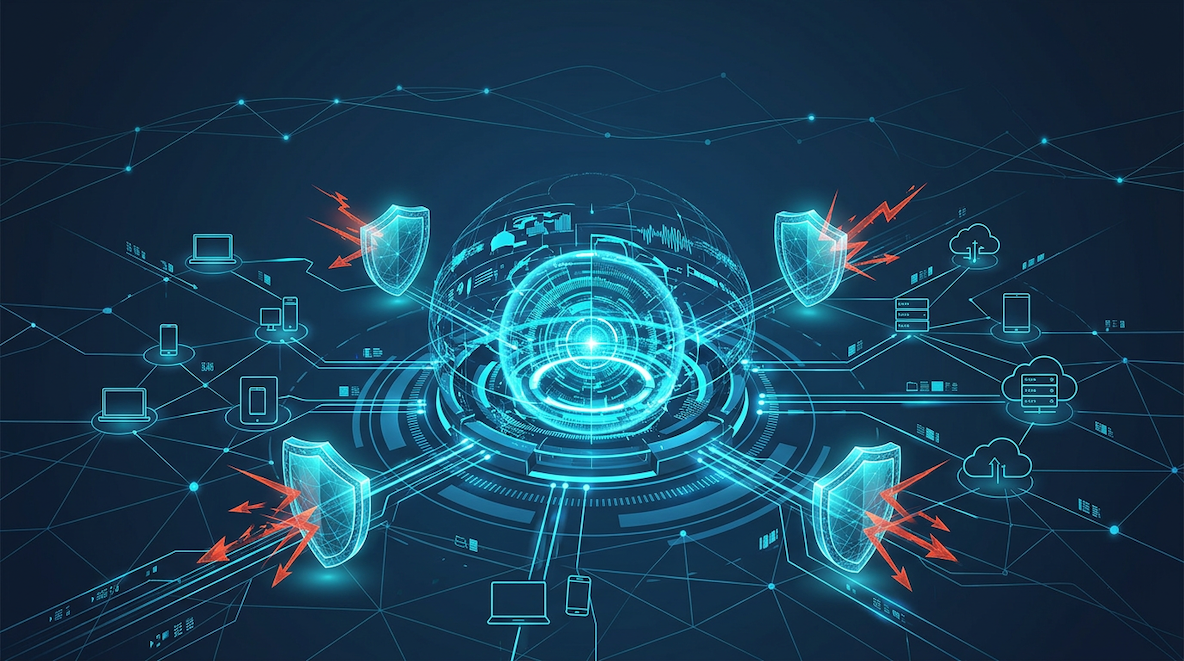
Cyber threats are evolving at a rapid pace, and traditional security tools alone are no longer sufficient to protect organizations from advanced attacks. Businesses today face ransomware, phishing campaigns, malware infections, and sophisticated targeted attacks that require continuous monitoring and rapid response.
To address these challenges, organizations are increasingly adopting Managed Detection and Response (MDR). MDR is an advanced cybersecurity service that focuses on proactive threat detection, investigation, and response to protect networks, systems, and sensitive data from cyber threats.
Understanding MDR is essential for organizations that want to strengthen their cybersecurity posture and reduce the risk of security breaches.
Understanding MDR in Cybersecurity
Managed Detection and Response (MDR) is a cybersecurity service that provides continuous monitoring of an organization’s IT environment to identify potential threats and respond to them quickly. Unlike traditional security solutions that simply generate alerts, MDR actively investigates threats and takes immediate action to prevent attacks.
MDR combines several advanced technologies with human expertise to provide a complete security solution. This includes threat intelligence, endpoint monitoring, security analytics, and incident response capabilities.
By leveraging these technologies and skilled security analysts, MDR services help organizations detect threats earlier and respond to them before they cause serious damage.
Why MDR is Important for Modern Businesses
Modern businesses operate in complex digital environments where cyber threats can originate from multiple sources. Attackers often use advanced techniques that bypass traditional security tools.
Without continuous monitoring and expert response capabilities, many organizations struggle to identify and stop these attacks.
MDR services provide several important advantages that help organizations strengthen their cybersecurity defenses. These include round-the-clock threat monitoring, faster incident detection, expert threat analysis, and immediate response to cyber incidents.
By identifying threats early and responding quickly, MDR helps minimize the impact of cyberattacks and ensures business continuity.
How Managed Detection and Response Works
MDR services operate through a structured process designed to detect, analyze, and respond to threats effectively.
Continuous Monitoring: MDR platforms continuously monitor network traffic, system logs, endpoints, and user behavior to detect suspicious activities. This monitoring occurs 24 hours a day, ensuring that threats can be identified at any time.
Threat Detection: Advanced analytics, machine learning, and global threat intelligence help MDR systems detect potential cyber threats. These tools analyze patterns and identify anomalies that could indicate malicious activity.
Threat Investigation: When suspicious behavior is detected, security analysts investigate the incident to determine whether it is a genuine threat. This step helps reduce false alarms while identifying real security risks.
Incident Response: Once a threat is confirmed, the MDR team takes immediate action to contain and eliminate the attack. This may include isolating infected devices, blocking malicious IP addresses, or removing malware from systems.
Reporting and Recommendations: Organizations receive detailed reports that explain the detected threat, the actions taken, and recommendations for preventing similar incidents in the future.
Key Features of MDR Services
Managed Detection and Response solutions provide several advanced capabilities that improve organizational security.
24/7 Security Monitoring: Continuous monitoring ensures that cyber threats are detected at any time, including outside normal business hours.
Advanced Threat Intelligence: MDR providers use global threat intelligence databases to identify emerging cyber threats and attack patterns.
Security Analytics: Advanced analytics tools help identify complex attacks that traditional security systems may miss.
Endpoint Detection and Response: MDR services often include endpoint protection to monitor laptops, servers, and mobile devices for suspicious activity.
Expert Security Analysts: Experienced cybersecurity professionals continuously monitor systems and respond to potential threats.
Benefits of MDR for Organizations
Organizations that implement MDR services experience several key benefits.
Faster Threat Detection: MDR systems use advanced monitoring and analytics to detect threats quickly, reducing the time attackers have to cause damage.
Reduced Security Risks: Continuous monitoring significantly reduces the risk of undetected cyberattacks.
Cost-Effective Security: Building and maintaining an in-house security operations center can be expensive. MDR allows organizations to access expert cybersecurity services without large infrastructure investments.
Improved Incident Response: Rapid response to security incidents helps minimize business disruption and financial losses.
Access to Cybersecurity Expertise: Organizations gain access to experienced security professionals who understand modern cyber threats and attack techniques.
MDR vs Traditional Security Solutions
Traditional security tools such as firewalls and antivirus software focus mainly on threat prevention. While these tools are important, they often only generate alerts when suspicious activity occurs.
MDR goes beyond traditional security solutions by providing active monitoring, investigation, and response capabilities. Instead of simply alerting organizations about potential threats, MDR services investigate incidents and take immediate action to stop attacks.
This proactive approach makes MDR a more comprehensive cybersecurity solution.
Conclusion
Managed Detection and Response has become a critical cybersecurity solution for modern organizations. By combining advanced technologies with skilled security professionals, MDR provides continuous monitoring, rapid threat detection, and effective incident response.
As cyber threats continue to grow in sophistication, businesses must adopt proactive security strategies to protect their digital assets. Implementing MDR services helps organizations stay ahead of attackers and maintain a strong security posture.
Organizations looking to enhance their cybersecurity infrastructure should consider MDR as an essential component of their overall security strategy.
"Managed Detection and Response transforms cybersecurity from reactive alerting into proactive threat defense."